
Energy is one of the largest operating costs in many industrial facilities. Motors, drives, compressors, heating systems, and production equipment all contribute to significant electricity consumption. Yet many organisations still lack detailed visibility into where and how energy is used across their operations.
Without accurate data, improving efficiency becomes extremely difficult. This is why modern industrial energy management strategies begin with a clear understanding of energy visibility.
Understanding Where Energy Is Used
The first step in improving energy performance is understanding how energy is consumed across a facility. Traditional utility meters provide a single view of total consumption, but they do not show which systems or processes are responsible for the majority of energy usage.
By implementing energy meters and power monitoring devices throughout the facility, organisations can begin analysing energy consumption at a much more detailed level. This often includes monitoring energy usage across:
- production lines
- large motors and drives
- compressed air systems
- HVAC and building services
- auxiliary equipment
This level of visibility allows engineers to identify inefficiencies that would otherwise remain hidden.
Integrating Energy Data with Automation Systems
Energy monitoring becomes significantly more valuable when it is integrated with industrial automation platforms.
By integrating energy meters with PLC and SCADA systems, energy data can be captured alongside operational information such as machine states, production activity, and process conditions. This provides the contextual data required for higher-level energy management platforms to analyse energy usage across processes and equipment.
This enables operations teams to evaluate key performance indicators such as energy per unit of production, helping identify equipment or processes that consume more energy than expected.
This integration also allows energy data to be visualised in the same dashboards that operators already use to monitor production systems.
Detecting Inefficiencies and Abnormal Conditions
Once energy consumption is visible across the facility, it becomes much easier to detect inefficiencies and abnormal operating conditions.
Energy monitoring systems can help identify issues such as:
- equipment running outside normal operating ranges
- motors operating under inefficient load conditions
- unexpected increases in energy consumption
- energy usage during non-production periods
These insights enable engineering teams to investigate potential problems before they impact operational performance.
Supporting Continuous Improvement
Many organisations integrate energy monitoring into broader operational improvement initiatives. Structured approaches such as ISO 50001 encourage organisations to monitor energy performance continuously and implement improvement strategies over time.
By regularly reviewing energy consumption trends and identifying opportunities for optimisation, organisations can steadily improve efficiency across their operations.
The Role of Industrial Integrators
Implementing an effective energy monitoring system requires expertise in electrical infrastructure, automation systems, and data integration.
At Staro Integration, we help industrial clients deploy energy monitoring solutions using technologies from industry-leading automation- and energy management OEMs. By integrating energy meters into the existing PLC and SCADA architecture, energy data can be collected together with operational information, providing the context needed for effective energy analysis.
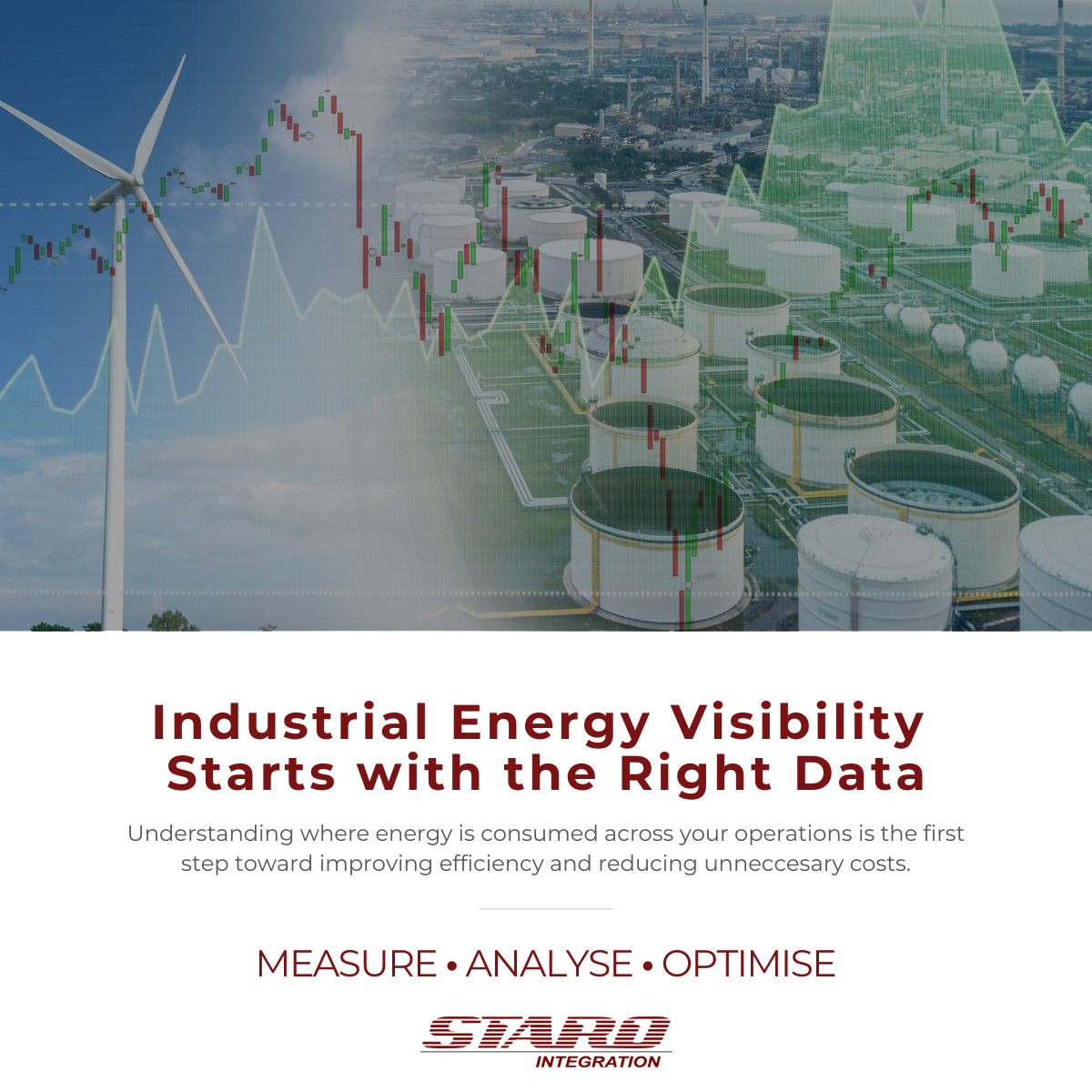
Energy visibility is the foundation of modern industrial efficiency. Once organisations understand where energy is being used, they can begin making informed decisions that improve both operational performance and sustainability.

FAQs
Why is energy visibility important for industrial efficiency?
Energy visibility helps industrial facilities understand exactly where electricity is being consumed across production lines, motors, drives, compressors, HVAC systems and auxiliary equipment. With detailed energy data, engineering teams can identify inefficient equipment, abnormal consumption and opportunities to reduce operating costs.
How can energy monitoring help identify inefficiencies in a manufacturing plant?
Energy monitoring systems reveal consumption patterns that traditional utility meters cannot show. They can highlight unexpected increases in energy use, equipment operating outside normal ranges, inefficient motor loads and energy consumption during non-production periods, allowing teams to investigate and correct problems earlier.
Why should energy meters be integrated with PLC and SCADA systems?
Integrating energy meters with PLC and SCADA systems allows energy consumption to be analysed alongside machine status, production activity and process conditions. This makes it possible to measure indicators such as energy consumed per unit of production and identify processes that are using more energy than expected.
How can Staro Integration help industrial facilities improve energy visibility?
Staro Integration can integrate energy monitoring technologies from leading automation and energy management OEMs into existing industrial PLC and SCADA architectures. This enables organisations to combine electrical consumption data with operational information and create a stronger foundation for energy analysis, optimisation and continuous improvement.
Is energy monitoring necessary before implementing an industrial energy management strategy?
Yes. Effective energy management starts with reliable measurement. Without understanding where, when and how energy is being consumed, organisations have limited ability to prioritise efficiency projects or accurately measure improvements. Energy visibility therefore provides the baseline required for informed energy optimisation and continuous improvement initiatives such as ISO 50001.



BUSINESS UNITS
Process Control Systems (PCS)
- Programmable Logic Controllers (PLC’s)
- Visualization (HMI and SCADA Systems)
- Software Standards (Abnormal Situation Management)
- Data Historian
- Remote Operating Centres
- Safety Control Systems
Electrical Systems (ES)
- Distribution and Motor Control Centres (MCC’s)
- Intelligent Motor Control
- Advanced Variable Speed Drive Systems
Industrial Information
& Communication
Technology (IICT)
- Industrial Ethernet Networks
- Remote Connectivity
- Cyber Security
- IT Virtualisation
- Manufacturing Execution Systems (MES)
- CMMS
We offer peace of mind project execution knowing that our activities are accredited by ISO9001:2015 Certification and a 5 star NOSA safety certification. This ensures that we maintain a high level of quality assurance and adhere to rigorous Occupational Health and Safety standards during project delivery.

SERVICES
Professional services include each phase of the project lifecycle:
Project management
STARO Integration manages every project with a comprehensive set of tools based on the PMBOK Project Management Standards.
Basic design
STARO Integration has over 25 years’ experience and our experienced engineering team works closely with the customer to understand the initial scope of work for a project and propose a high-level view of the system requirements.
Detailed hardware design
STARO Integration performs the Detailed Hardware Design in line with industry-, OEM- and Quality standards combined with our 25 years of industry knowledge. This is done with continuous client reviews and approval cycles.
Detailed software design
STARO Integration utilise our inhouse software standards as a baseline and with the client determine the standards to be utilised. The Control System Software is then developed utilizing these proven Software standards resulting in a consistent, correct, maintainable control system.
Design drawings
STARO Integration provides Design and Drawing services for instrumentation, field devices and electrical equipment. These drawings including layout, installation, wiring, junction boxes, and cable routing.
Network design
STARO Integration designs according to industry standards as well as vendor specific networks for distributing controllers, I/O, data servers, and operator stations.
Simulation and Factory Acceptance Testing
a FAT plan with checklists tests every loop and HMI/SCADA screen against the Software Design Specification. Quality of workmanship is reviewed against the Quality Assurance check sheets and a punch list of items are resolved before shipping the system.
Site Acceptance Testing and Start-up
After the control system and all the I/O have been installed and commissioned, STARO Integration works with the client to supply the Site Acceptance Testing in accordance with the SAT plan. Site Acceptance Testing proves that the supplied system, including the control logic and operator stations, is interfaced to the field I/O correctly and performs in accordance with the functional design specification.
Training services
STARO Integration can offer either OEM specific training or training specific to a control system project.
Maintenance and support
STARO Integration offers qualified engineers to support the customers installed Control System.
A Service Level Agreement (SLA) makes pre-designated engineers available for pre-planned work or for short notice call outs.
Lifecycle management
STARO Integration can provide the client with strategies, alternatives, and estimates for upgrades and migrations.
Download documents
Download documents

HEAD OFFICE

17 Venus Street, Sasolburg, 1947

+27 (0)16 971 3333
SECUNDA BRANCH
16 Steenkamp Street, Secunda, 2302
+27 (0)17 634 7011

sales@staro.co.za
PROUDLY DESIGNED AND BUILT BY BUNNYPANTS GRAPHIC & WEB DESIGN STUDIO | 2023


