

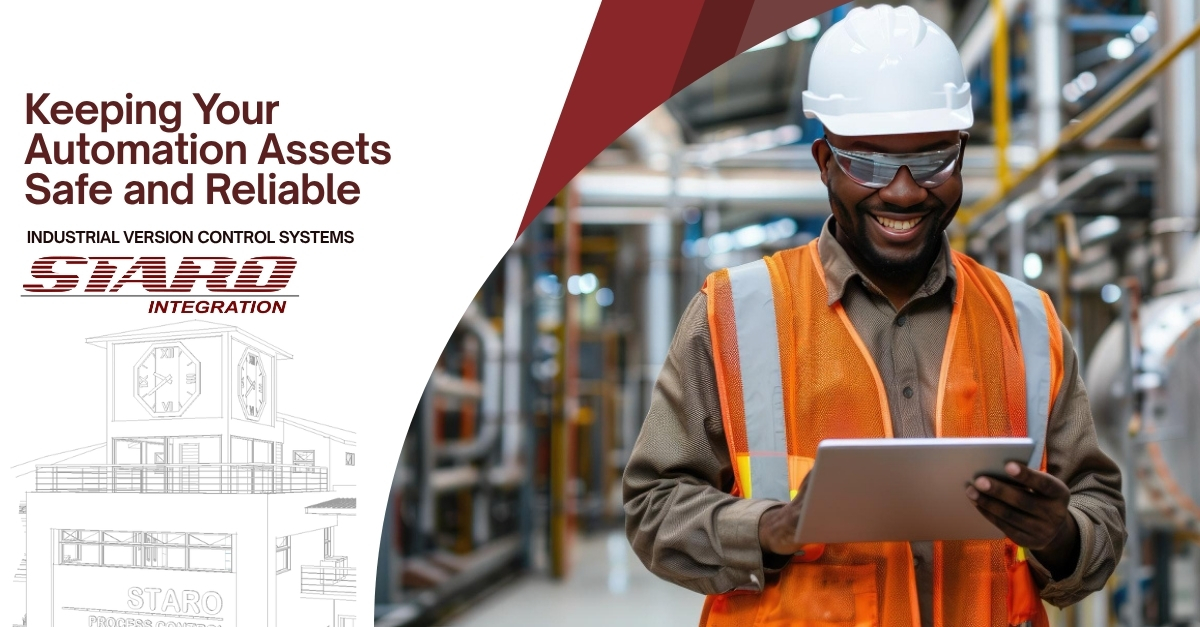
In modern industrial plants, engineers constantly modify PLC programs, HMI configurations, and SCADA projects. Without proper version control, even small undocumented changes can lead to extended downtime, operational errors, and compliance headaches. Industrial version control systems are designed to manage these changes systematically, ensuring your control assets remain reliable and auditable.
What is Industrial Version Control?
Industrial version control focuses on automation assets: PLC logic, SCADA/HMI projects, firmware, and operational recipes. It tracks who made changes, when, and what was modified, providing a centralized repository for all control system files. This visibility helps engineers avoid conflicts, maintain consistency, and recover quickly when issues arise.
Risks of Not Having Version Control
Without version control, plants face several operational risks:
- Untracked Changes: Troubleshooting becomes slower when it’s unclear who modified a program or when.
- Incorrect Rollbacks: Reverting to a previous version manually can introduce errors and prolong downtime.
- Compliance Failures: Regulatory audits require traceable records of system changes.
- Knowledge Loss: When engineers leave or rotate shifts, undocumented changes can result in lost operational knowledge.
Core Capabilities of an Industrial Version Control System
A robust version control system provides several critical features:
- Automated Backups: Scheduled backups of PLC, HMI, and SCADA projects.
- Change Detection: Clear tracking of who changed what and when.
- Central Repository: One source of truth for all engineering assets.
- Rollback & Restore: Quick recovery of previous versions to minimize downtime.
- Integration with Disaster Recovery: Ensures that backup systems align with broader operational continuity strategies.
Benefits for Plants and Operations
Implementing version control brings tangible operational benefits:
- Faster Recovery: Reduce downtime with quick access to previous versions.
- Improved Collaboration: Teams can work on the same assets without overwriting each other’s work.
- Regulatory Compliance: Maintain audit-ready logs of all changes.
- Extended Asset Lifespan: Reduce the risk of errors that can damage equipment or disrupt processes.
Real-World Use Cases
- Automotive Manufacturing: A global automotive supplier implemented industrial version control across multiple production sites, enabling rapid recovery after unexpected system faults. This approach reduced downtime and ensured production continuity.
- Consumer Goods Production: A multinational plant standardized backups and change tracking for PLCs and SCADA systems. The centralized repository allowed engineers to quickly identify and revert changes when needed, improving operational efficiency and minimizing errors.
- Metals & Mining Plant: After a hardware failure affected multiple PLC cabinets, automated version control allowed engineers to restore critical programs quickly. The system minimized production losses and highlighted the importance of robust backup processes.
Getting Started
To implement version control effectively:
- Assess Your Assets: Identify all PLCs, HMIs, SCADA projects, and other critical automation files.
- Define Change Management Processes: Establish rules for who can make changes and how they are recorded.
- Deploy a Version Control System: Automate backups, logging, and change tracking to protect your assets.
- Monitor and Optimize: Regularly review system performance and make adjustments as necessary to continually improve operations.
Industrial version control is no longer optional — it is a key part of plant reliability, operational efficiency, and regulatory compliance. By systematically tracking changes, automating backups, and enabling quick recovery, your team can minimize risk and maximize uptime.




BUSINESS UNITS
Process Control Systems (PCS)
- Programmable Logic Controllers (PLC’s)
- Visualization (HMI and SCADA Systems)
- Software Standards (Abnormal Situation Management)
- Data Historian
- Remote Operating Centres
- Safety Control Systems
Electrical Systems (ES)
- Distribution and Motor Control Centres (MCC’s)
- Intelligent Motor Control
- Advanced Variable Speed Drive Systems
Industrial Information
& Communication
Technology (IICT)
- Industrial Ethernet Networks
- Remote Connectivity
- Cyber Security
- IT Virtualisation
- Manufacturing Execution Systems (MES)
- CMMS
We offer peace of mind project execution knowing that our activities are accredited by ISO9001:2015 Certification and a 5 star NOSA safety certification. This ensures that we maintain a high level of quality assurance and adhere to rigorous Occupational Health and Safety standards during project delivery.

SERVICES
Professional services include each phase of the project lifecycle:
Project management
STARO Integration manages every project with a comprehensive set of tools based on the PMBOK Project Management Standards.
Basic design
STARO Integration has over 25 years’ experience and our experienced engineering team works closely with the customer to understand the initial scope of work for a project and propose a high-level view of the system requirements.
Detailed hardware design
STARO Integration performs the Detailed Hardware Design in line with industry-, OEM- and Quality standards combined with our 25 years of industry knowledge. This is done with continuous client reviews and approval cycles.
Detailed software design
STARO Integration utilise our inhouse software standards as a baseline and with the client determine the standards to be utilised. The Control System Software is then developed utilizing these proven Software standards resulting in a consistent, correct, maintainable control system.
Design drawings
STARO Integration provides Design and Drawing services for instrumentation, field devices and electrical equipment. These drawings including layout, installation, wiring, junction boxes, and cable routing.
Network design
STARO Integration designs according to industry standards as well as vendor specific networks for distributing controllers, I/O, data servers, and operator stations.
Simulation and Factory Acceptance Testing
a FAT plan with checklists tests every loop and HMI/SCADA screen against the Software Design Specification. Quality of workmanship is reviewed against the Quality Assurance check sheets and a punch list of items are resolved before shipping the system.
Site Acceptance Testing and Start-up
After the control system and all the I/O have been installed and commissioned, STARO Integration works with the client to supply the Site Acceptance Testing in accordance with the SAT plan. Site Acceptance Testing proves that the supplied system, including the control logic and operator stations, is interfaced to the field I/O correctly and performs in accordance with the functional design specification.
Training services
STARO Integration can offer either OEM specific training or training specific to a control system project.
Maintenance and support
STARO Integration offers qualified engineers to support the customers installed Control System.
A Service Level Agreement (SLA) makes pre-designated engineers available for pre-planned work or for short notice call outs.
Lifecycle management
STARO Integration can provide the client with strategies, alternatives, and estimates for upgrades and migrations.
Download documents
Download documents

HEAD OFFICE

17 Venus Street, Sasolburg, 1947

+27 (0)16 971 3333
SECUNDA BRANCH
16 Steenkamp Street, Secunda, 2302
+27 (0)17 634 7011

sales@staro.co.za
PROUDLY DESIGNED AND BUILT BY BUNNYPANTS GRAPHIC & WEB DESIGN STUDIO | 2023


